PRODUCT CATEGORIES





Homepage >
Le Corbusier
Back
Back
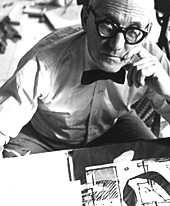
Le Corbusier (born Charles-Édouard Jeanneret-Gris, 1887–1965) was a Swiss-French architect, painter, and writer who revolutionized 20th-century architecture. He is considered a primary pioneer of Modernism, famous for his philosophy that "a house is a machine for living in".
In the 1920s, he developed a radical architectural language defined by five core principles:
- Pilotis: Raising the building on reinforced concrete stilts to free up the ground.
- Roof Garden: Utilizing flat roofs for domestic green space.
- Free Plan: Removing load-bearing walls to allow for open, flexible interiors.
- Ribbon Windows: Using long, horizontal glass strips to provide even light.
- Free Facade: Designing exterior walls independently of the building's structure.
- Villa Savoye (1931): The ultimate realization of his "Five Points," located in Poissy, France.
- Unité d’Habitation (1952): A massive "vertical village" in Marseille that became a model for post-war social housing.
- Notre-Dame du Haut (1955): A sculptural chapel in Ronchamp that marked a shift from rigid geometry toward organic, curvilinear forms.
- Chandigarh (1950s): He designed the master plan for this new Indian city, including major government buildings like the Palace of Assembly.
Back